
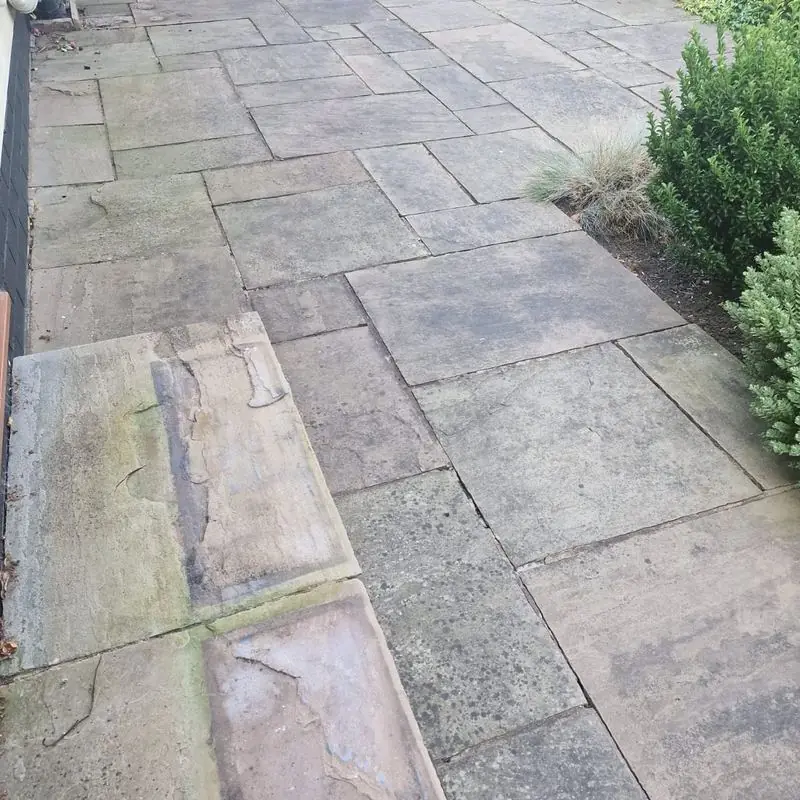
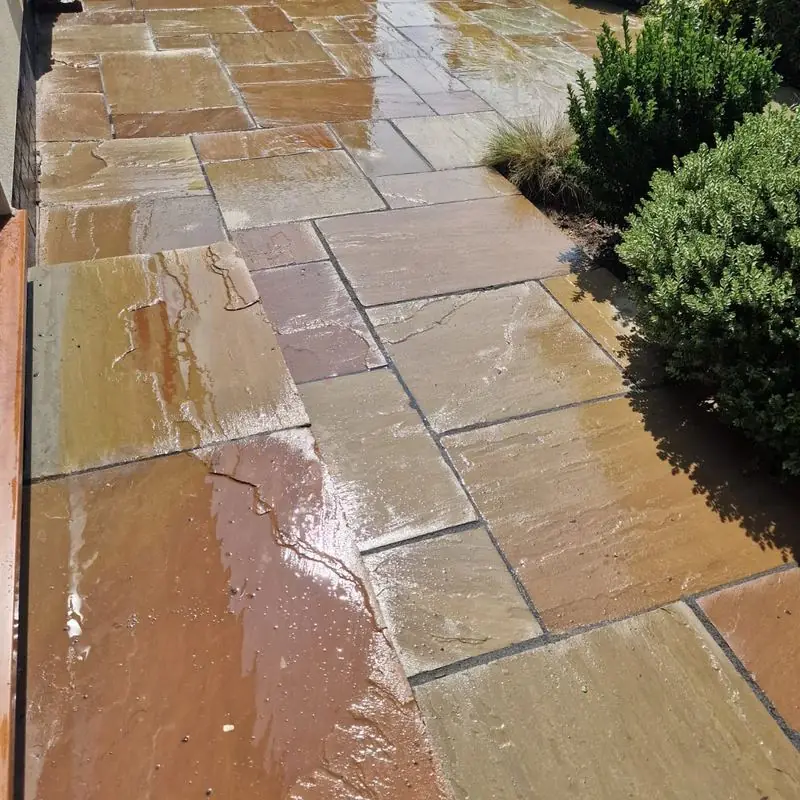
Indian sandstone patio restoration, Newton-le-Willows
Dirt, algae and failed joints. After a full clean the old jointing was raked out and the patio re-pointed with ProJoint Titan jointing compound.
Those small black dots that won't scrub or jet wash off are usually lichen, rooted into the surface of the stone. They need treating, not just washing.
Black spot is lichen: a slow-growing mix of fungus and algae that roots into tiny pores in the stone. It starts as small dark dots and slowly spreads into patches. Because it's anchored into the surface, a brush or a jet wash goes straight over it.
We'll always tell you from your photos what to expect. Very old, deep-set black spot can fade a lot without disappearing completely.
A yearly clean with a treatment stops lichen getting established again. Re-pointing failed joints also helps, as it gives moss and weeds less to grow in. See our Indian sandstone cleaning page.
Dirt, algae and failed joints. After a full clean the old jointing was raked out and the patio re-pointed with ProJoint Titan jointing compound.
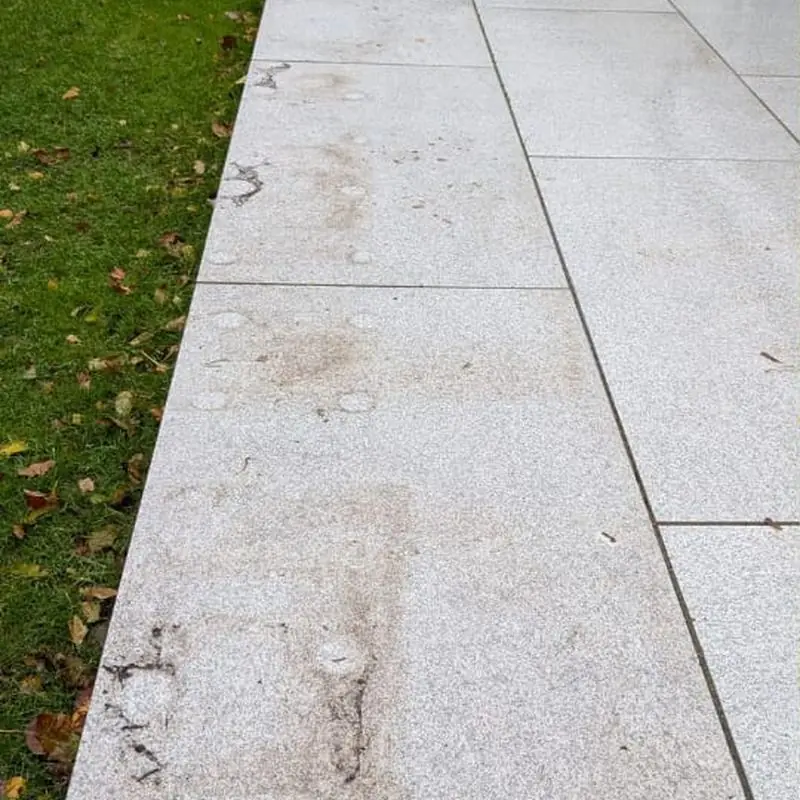
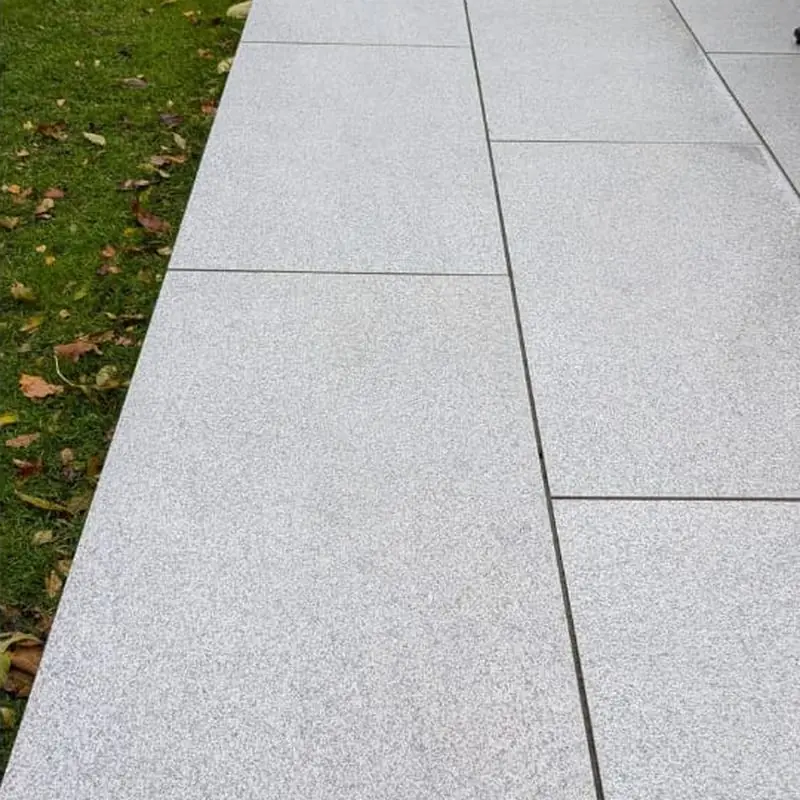
Light grey porcelain paving with dark marks, spots and staining. Cleaned back to a clean, even finish without dulling the surface.
See more on our patio cleaning page.
Not on its own. Washing removes the green algae and dirt around it, but black spot is rooted into the stone, so it needs a treatment that kills it.
It's mainly cosmetic, but it spreads over time and makes a patio look old and dirty even straight after a clean.
Mostly natural stone like Indian sandstone and limestone, plus older concrete slabs. It's less common on porcelain, though porcelain can still pick up dark marks and staining.
Photos of the area plus your full address and postcode are all we need. Most prices go out the same day.